
The Bioregional Watershed Model
Healthy watersheds. Owned by the people who live in them.
AFRISTAR'S CORE WORK
Afristar works with rural communities to restore the land that holds their water, and to build a nature-based economy on the wealth that restoration creates.
When a watershed recovers, it produces more water, more soil and more income, and the community owns what it produces. It is also where partnership and funding are needed most: to restore a watershed properly, and to prove a model of regeneration that others can follow.
How the model works
Restoration is the first stage of industrialisation. A recovering watershed produces raw materials, and processing them locally, in community-owned Hubs, keeps the value where the work was done and feeds it back into the next stage of restoration. Hubs also make finished products, train people and start enterprises, so skills and value are built where the raw material grows.
Public spending that builds assets, not dependency
Public money already flows into landscape and livelihood programmes. When it passes through communities without community ownership of what it creates, it gives temporary relief.
Routed through community ownership structures, the same spending restores watersheds, employs people, builds skills and builds the asset base that enterprise depends on. The poverty alleviation programme becomes the first phase of the enterprise development programme.
The Expanded Public Works Programme is the concrete case. It already funds ecological restoration through Working for Water, Working for Fire and related programmes. The same budget and the same community labour, routed through community ownership, build equity in a watershed that returns value for decades. Workers do not restore the landscape and walk away.
The test for public spending
Does it build community-owned assets that appreciate over time, or create a dependency that needs the same expenditure again next year?
More water
Gully repair, riparian recovery and rangeland restoration slow runoff, hold water in the soil and bring springs and baseflow back.
More soil
Living ground cover and tree systems rebuild topsoil and cut the sediment that reaches rivers and dams.
More income
Recovered land produces a surplus, and local processing keeps the value in the community.
Six ways restoration builds wealth
Land improvement
Soil fertility, water retention and biodiversity rise each year, so natural capital appreciates with each season of management.
Perennial crops
Trees gain value over a productive life of 20 years or more, building a biological asset.
Infrastructure ownership
Watershed works, processing facilities and equipment are owned by the community Trust and sit on its balance sheet.
Enterprise equity
Cooperatives and community companies build balance sheet value and pay dividends.
Ecosystem services revenue
Carbon credits, water fund payments and biodiversity credits create annuity income.
Human capital
Skills, knowledge and governance capacity become community assets that pass across generations. Hubs turn them into trades and local businesses.
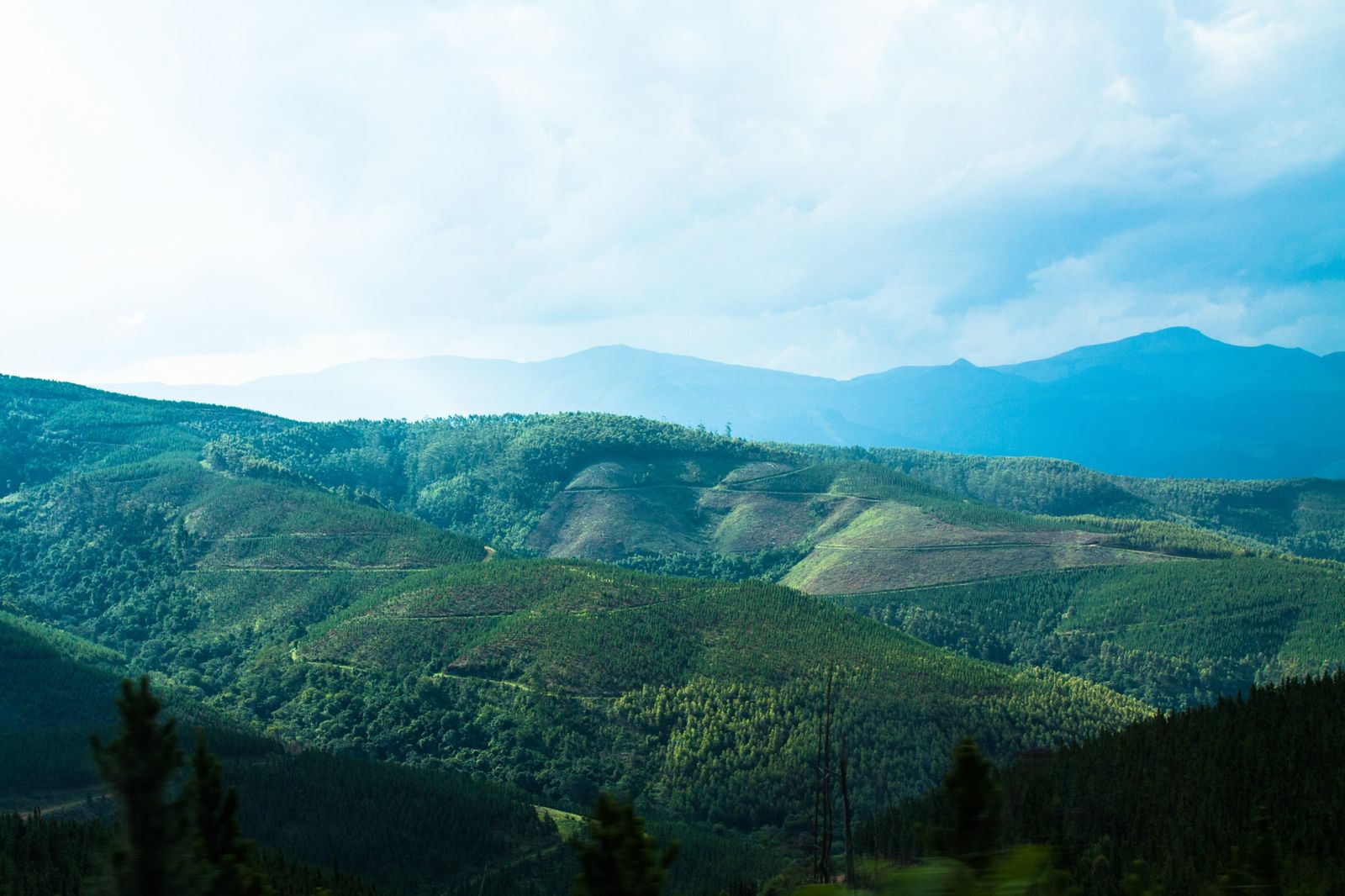
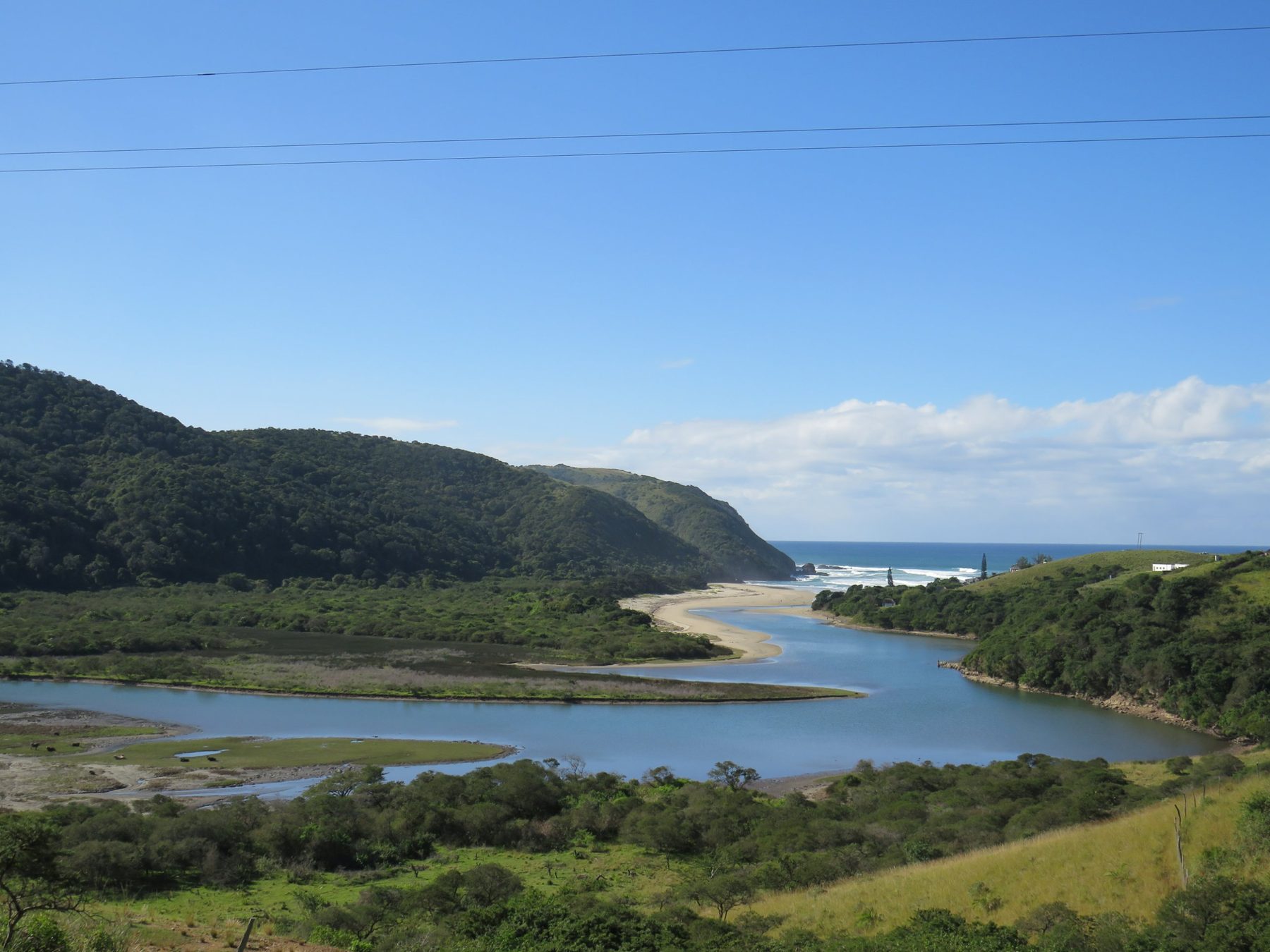
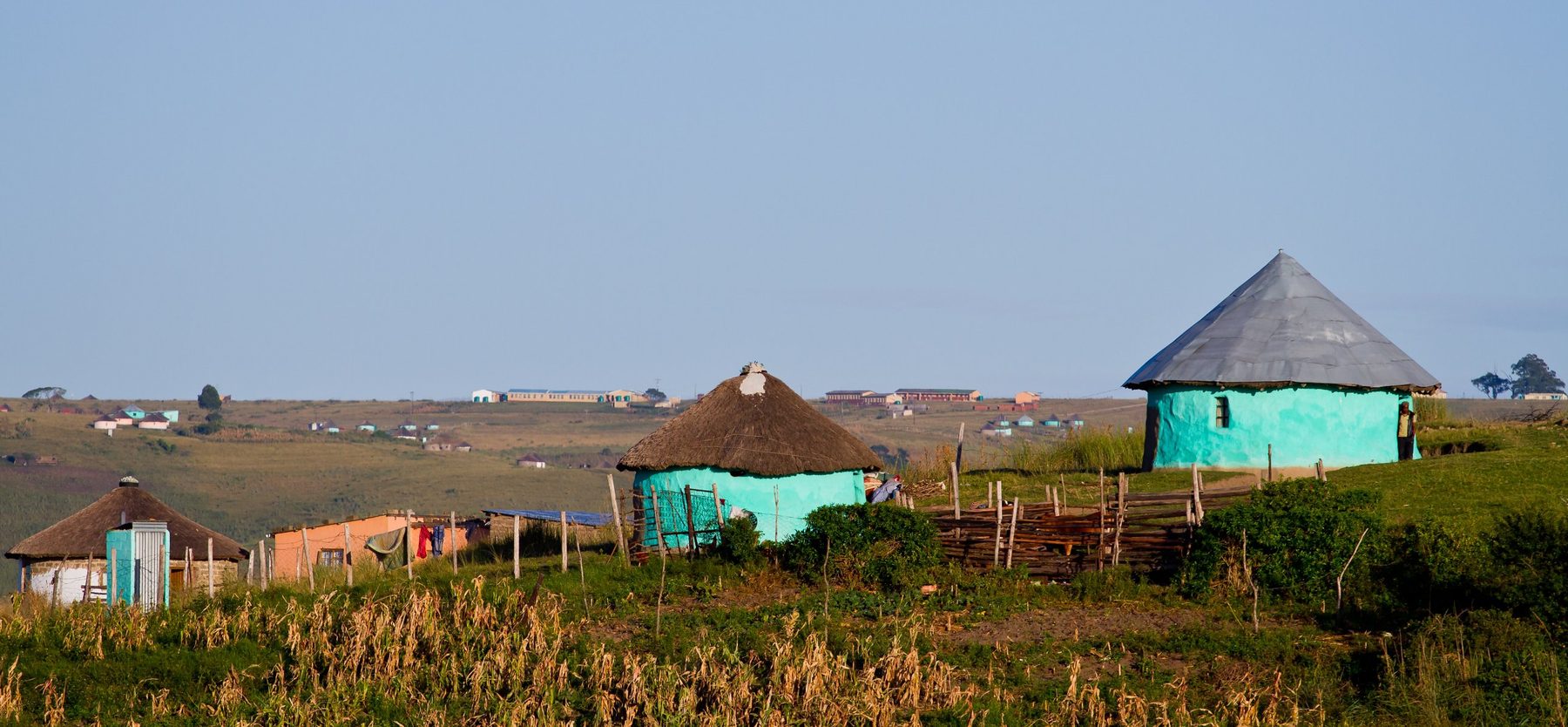
One landscape, three land-use systems
A watershed is the natural unit of land, water and community. What happens upstream decides what flows downstream: the water, the soil, the silt and the floods.
Where slopes and rangeland are degraded, springs weaken and rivers carry more sediment, and dams, irrigation schemes and towns below lose capacity. Restoring the land upstream protects that investment, and gives the households who live there a productive asset.
The model works at catchment scale, from the ridge to the river, with three systems that support each other.
- Upper slopes and rangeland. Holistic livestock management: planned grazing that turns degraded communal rangeland into recovering pasture.
- Mid slopes. Agroforestry: subtropical fruit, hemp and timber on suitable land.
- Villages. Homestead and village food production for household food security, with the Hives and Hubs that organise the economy.
- Drainage lines and river margins. Gully repair and riparian recovery that slow runoff and bring baseflow back.
- Downstream. Dams, towns and farms that receive cleaner, steadier water.
Water for everyone, forever, sustainable livelihoods and opportunities for the people who work the land.
Six steps, each building on the last
1Watershed
Plan at catchment scale, starting with the landscape and the people who live in it.
2Water
Gully repair, riparian recovery and rangeland restoration slow runoff and bring springs back.
3Soil
Living cover and tree systems rebuild topsoil and cut the sediment reaching rivers.
4Livestock
Holistic grazing turns degraded communal rangeland into recovering pasture.
5Produce surplus
Design, plant and harvest edible productive landscapes alongside food crops. The harvest creates the surplus.
6Hub and Hive
Hives produce at village level. Hubs aggregate the surplus, process and manufacture, innovate, transfer skills and educate, and take the products to market. Income returns to the community.
Many crops, one landscape
A mixed portfolio spreads risk and keeps food security at the base, rather than depending on a single commodity.
- Edible tree crops
- Avocado, macadamia, citrus and other fruit
- Food and high-value cash
- Hemp, cannabis and biomass
- Food, fibre and medicine
- Feedstock for biocomposites, building materials and bioenergy
Where smallholders already grow landrace cannabis, policy is the barrier. Our position.
- Holistic livestock
- Meat, hides and leather
- Fibre
- Homestead and village food
- Vegetables and staples
- Household nutrition and local markets
- Timber for building, fencing and fuel
What a Hub can make: the five Fs
Hemp, one crop in the mix, shows how far beneficiation can go. Its products fall into five Fs. Each is a different skill set and a different local business.
- FarmingSeed and agri-inputs
- FoodsHemp hearts, flour, oil and protein
- FeedsSeed cake and protein for animal feed
- FibresBast fibre and hurd for textiles, paper and building materials
- FractionsExtracts for medicines, cosmetics and chemicals
Five Fs framework: Localisation Support Fund, hemp value chain development study, 2026.
On the ground
The method grows out of practical work with communities: food gardens, household nurseries and skills training, at Leshiba in the Western Soutpansberg, and a full action plan for a municipality in the Waterberg.
 Community food garden, Leshiba.
 Household nursery, Leshiba.
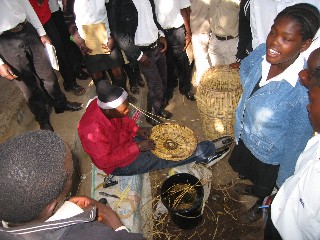 Skills training: basket weaving, Leshiba.
From restoration to a nature-based economy
Restoration is the first stage of industrialisation. A recovering watershed produces raw materials, and processing them locally keeps the value in the community.
- Stage 1
Restore
Public and grant funding repairs the land. The work creates jobs, and the land begins to produce.
- Stage 2
Produce
Agroforestry, livestock and food systems yield fruit, fibre, timber, hemp, meat and hides in volumes degraded land could never support.
- Stage 3
Process
Community Hubs add value locally: drying, pressing, milling, tanning, packing and fibre processing, and the manufacture of finished products. Hubs train people and incubate the local enterprises that run them.
- Stage 4
Trade
Hubs aggregate output from many Hives and sell to regional, national and export markets. Origin becomes part of the product.
- Stage 5
Reinvest
Income flows back into community Trusts, which fund the next phase of restoration and new enterprises.
Reinvestment returns to Stage 1. Wealth compounds because the land is improving at the same time.
Hemp is one of the value chains. See how it fits in South Africa's cannabis opportunity in our cannabis infographic, and on the Cannabis page.
Hive and Hub
Hives are village-level producers. A Hub is shared by many Hives: it aggregates, processes, makes and markets what they grow. It trains the people and incubates the enterprises that do the work, supported by quality standards and traceability.
The income returns to a community Trust, and the Trust funds the next stage of restoration. The jobs and margin that normally leave the region as raw exports stay.
A different kind of economy
In an extractive economy, the land is used up and the value leaves. In a nature-based economy, the land is the capital and restoration is the investment. Natural capital (water, soil, biodiversity, carbon) grows, and the enterprises built on it grow with it.
Restoration at scale has worked before
None of the parts is untested. What is missing is the combination, built around communities who own it.
Loess Plateau, China
Two World Bank-supported projects restored heavily eroded land across four provinces. The first covered more than 35,000 km², with average farmer income rising from 585 yuan to 1,624 yuan per person between 1994 and 2005. The World Bank reports 2.5 million people lifted out of poverty.
Costa Rica, payments for ecosystem services
A national forest-finance fund pays landowners under monitored contracts for the water, carbon and biodiversity services their land provides. In 2021 it financed protection of about 284,000 ha of forests and plantations. The record shows reach, not whether forest cover is additional.
Both cases show restoration financed as an investment. Neither is a South African communal-tenure case, and communal tenure is a design constraint here, so each informs the model without being copied.
Sources: World Bank, Restoring China's Loess Plateau, 2007; China Daily, 21 March 2006; El Mundo CR, on the FONAFIFO programme in 2021. These are precedents, not claims about Afristar's own delivery.
Community ownership
The model is built on communal tenure. Land stays with the people who hold it. Enterprise ownership sits with Community Development Associations and Trusts, governed by transparent benefit-sharing rules agreed with the community.
- No land is acquired or transferred.
- Free, prior and informed consent comes before any work begins.
- Benefit-sharing rules are written down and open, to guard against capture by a few.
Afristar provides technical support. Community and institutional leadership direct the work.
What we measure
Every number is tracked and reported, so communities and partners can see what restoration delivers.
- Hectares restored and under improved management
- Sediment reduction and water retention
- Soil health and carbon
- Household income and jobs, including women and youth
- Enterprises operating and financially viable
Where partnership and funding are needed
Every programme starts the same way: one sub-catchment, a community that wants it, and a coalition ready to back it. We are developing watershed programmes in more than one catchment. We are looking for funders, government agencies, research institutions and community organisations who want to restore a watershed with us.
Settled in the design: communal tenure, community ownership through Trusts and Development Associations, no land acquisition, and the Hive-and-Hub structure. Still to be secured: the finance, partners and site agreements for each catchment.
Restoration
Public and grant funding to repair gullies, riparian zones and rangeland. The work creates jobs from the first season.
Community institutions
Support to set up Community Development Associations and Trusts, benefit-sharing rules and local land-use plans.
Enterprise and Hubs
Blended and patient finance for agroforestry and livestock value chains, processing Hubs and market links.
Measurement and coordination
Monitoring of sediment, soil carbon, water and income, a natural capital account, and a body to coordinate across sectors.
- Phase 0Coalition, baseline and site selection6 to 12 months
- Phase 1Demonstration at sub-catchment scaleProof of the model on the ground
- Phase 2Scale-upCatchment by catchment
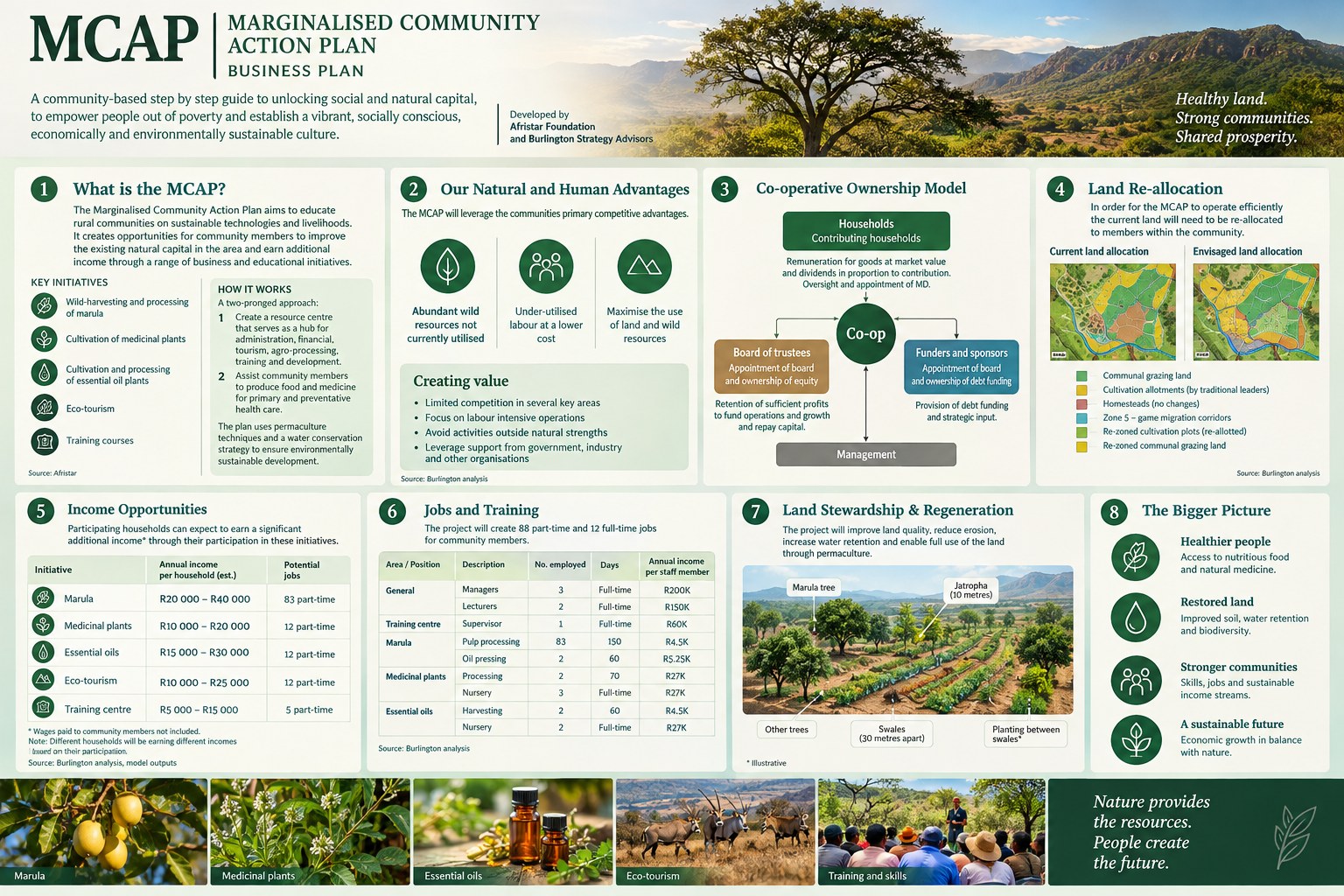
Where the model comes from
Marginalised Community Action Plan, Waterberg (2009)
In 2009 Afristar received European Union funding to design an action plan for Ward 5 of Mogalakwena Municipality, Limpopo. We planned it on a real municipality, using the natural and social capital already on the ground.
It starts with an honest inventory: land, water, indigenous knowledge and people. From that it builds food security, better health, rural enterprise and a way up. Skills and education sit at the centre, so the resource base replenishes as it is used.
Concept strategy documents
Rehydrating Africa Project
A concept for a broad-scale ecological design of an African regenerative land use plan that restores natural watersheds and ecosystems.
Transkei Rural Regeneration
A strategy to rehabilitate degraded marginal land, secure water supply forever, and reskill people to unlock the natural value around them. Now developed into the Transkei Bioregional Regenerative Development Model.
Planning a watershed programme?
We offer ecological design and planning, CSI and corporate advisory, and cannabis development models.